
Best 3D printers for schools and classrooms
Updated 16 October 2026 · Live prices updated daily
Enclosed, auto-levelling, remote-monitorable FDM printers built to survive student hands, supervised print farms, and a term's worth of failed first layers.
- #1
 ANYCUBIC( Grey PLA) Anycubic Kobra S1 MAX + 6KG PL$765 CoreXY · heated chamber · 42.9 L · 350°C · LeviQ 3.0
 - #2
 FLASHFORGECreator 5 Pro Industrial$849 CoreXY · heated chamber · 16.8 L · 320°C · Fully Automatic Calibration &
 - #3
 R QIDI TECHNOLOGYQIDI Plus5 Multi-Color$899 CoreXY · heated chamber · 30.7 L · 370°C · Loadcell
 - #4
 CrealityK2 Plus$1003 CoreXY · heated chamber · 42.9 L · 350°C · Strain gauge
 - #5
 UGEEFunbox$214 · 1.7 L · 260°C · Leveling-free printing
 - #6
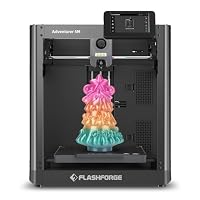 FLASHFORGEAdventurer 5M$249 CoreXY · 10.6 L · 280°C · Automatic
 - #7
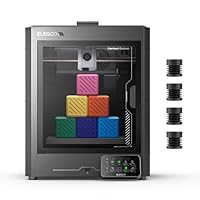 ELEGOOCentauri Carbon$290 CoreXY · 16.8 L · 320°C · Auto-leveling
 - #8
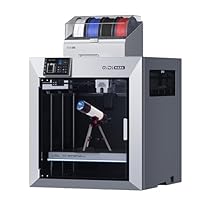 R QIDI TECHNOLOGYQIDI Max4$1299 CoreXY · heated chamber · 51.7 L · 370°C · Loadcell Sensor Integrated int
 - #9
 R QIDI TECHNOLOGYQIDI Q2C$349 CoreXY · 18.9 L · 370°C · Loadcell Sensor Integrated int
 - #10
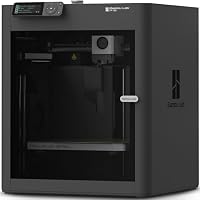 BAMBULABBambu Lab P1S$399 CoreXY · 16.8 L · 300°C · Strain gauge
No listings match your current marketplace selection - tick more sources above.
Matt's take
A classroom printer lives a harder life than a hobby one. Kids drop filament on the bed, pull prints off too early, forget to reset the nozzle. What matters: full enclosure (hot ends and heated beds are burn hazards in a supervised setting), reliable auto-levelling (a teacher does not have ten minutes every lesson to re-tram), remote camera plus pause-on-spaghetti, and a spare-parts supply that will still exist in three years. Prusa and Bambu both build what schools need; budget sub-$700 machines skip too many of the safety features.
Frequently asked
What is the best 3D printer for schools? +
Any fully enclosed auto-levelling machine with remote monitoring in the $400-800 bracket. Bambu A1 combo, Prusa MK4S, Creality K1 Max all fit. The main requirement is the enclosure - a hot nozzle at kid height is a safety incident waiting to happen.
How many printers does a typical classroom need? +
One per 15-20 students is a reasonable starting ratio for STEM clubs. Full-class assignments run closer to 1 printer per 6-8 students because print time becomes the bottleneck. Many schools run small farms of 3-6 cheap-but-enclosed machines instead of one premium printer.
Should a school buy FDM or resin? +
FDM, unsupervised. Resin requires nitrile gloves, IPA, and ventilation - fine for a monitored lab bench, wrong for a shared classroom. FDM with PLA is the low-hazard default.
Related reading
Ranking is spec-driven. It favours printers that objectively have the capabilities this shortlist targets. Firmware, support quality and long-term reliability aren't on the spec sheet - read the full printer page and owner reports before committing.
